

The Marketing Accountability Gap Widens with More Spending Producing Less Clarity
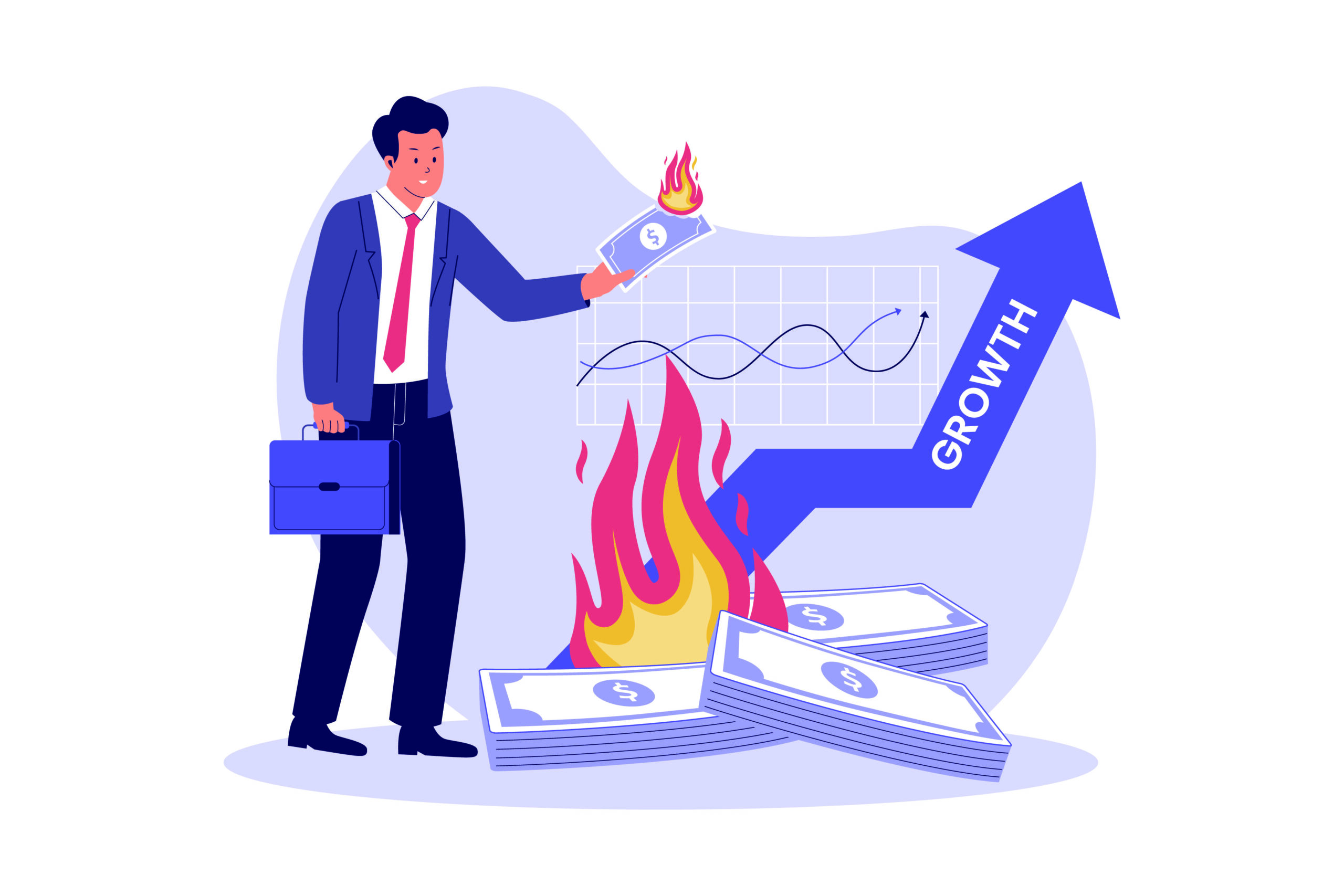
 Businesses have never had more ways to spend a marketing dollar, or more data supposedly proving those dollars are working. SEO agencies report rankings. Digital firms report clicks and conversions. Social teams measure engagement. PR tracks visibility. Paid media produces attribution dashboards. Now companies are adding another layer as they race to optimize for AI-powered discovery.
Yet beneath all those metrics sits a surprisingly basic question: Which investments are actually generating qualified opportunities, customers and revenue? For many businesses, the answer is far less clear than the dashboards suggest.
Marketing and business growth strategist Deborah Dodson, founder and managing director of Strategic Alliance Marketing Group, sees a widening disconnect between marketing activity and business performance. With more than 20 years of experience spanning marketing, business development and growth strategy, Dodson works with organizations to scrutinize vendor performance, challenge recommendations and determine whether individual investments actually function as part of a coherent growth strategy.
“We’ve created an environment where nearly every marketing channel can produce numbers showing that it is working,” Dodson says. “The harder question is whether those numbers demonstrate that the business itself is benefiting.”
When Everything Is Working, What Is Actually Working?
The problem often develops gradually. A company hires an SEO agency. Later it adds paid advertising. Someone else takes over social media. PR operates independently. A new website launches. The company pays for directories, sponsorships, memberships and marketing technology. Eventually, what began as individual solutions becomes a sprawling marketing ecosystem in which multiple vendors have different objectives, reporting systems and definitions of success.
 Dodson describes this as a kind of marketing stack creep. Businesses accumulate agencies, platforms, subscriptions and campaigns until it becomes difficult to see where responsibilities overlap, where money is being duplicated and whether all those activities still serve the company’s objectives.
“One agency reports that rankings are improving. Another points to clicks. Social media shows engagement. PR demonstrates visibility,” Dodson says. “Those can all be legitimate measures, but if nobody is looking across the entire operation and connecting those activities to business outcomes, you can end up with a lot of apparent success without knowing what is actually producing growth.”
That distinction is becoming increasingly important because activity is relatively easy to measure. Business impact is not. A campaign can increase traffic without improving the quality of prospects. Search rankings can rise without materially affecting revenue. Content production can increase without generating meaningful engagement. Multiple vendors can potentially claim influence over the same conversion. An impressive dashboard, in other words, does not necessarily mean an impressive return.
AI Is Making Attribution Even Messier
Artificial intelligence is adding urgency to the issue because it is changing where and how customers discover businesses. The customer journey was already fragmented. Now a prospect might encounter a company through Google, an AI-generated answer, LinkedIn, a map listing, online reviews, an industry directory, media coverage or another third-party source before ever visiting the company’s website.
According to Dodson, that does not mean traditional SEO is dead. It means businesses need a broader understanding of visibility. “SEO still matters, but discovery is no longer confined to a conventional search-results page,” she says. “Businesses need to think about the authority and credibility they are establishing across their entire digital footprint. The question isn’t simply, ‘Where do we rank?’ It’s increasingly, ‘Where are we being found, what does a prospective customer find when they encounter us, and does that visibility ultimately contribute to the business?’”
That encompasses websites and search performance, but also reviews, credible backlinks, media mentions, social presence, business profiles, directories and other signals that help establish authority across the web.
AI therefore presents businesses with a potential trap. In the rush to embrace the newest form of optimization, companies can simply add another vendor, platform or tactic to an already fragmented marketing operation.
Dodson believes the more useful question is not merely how much to spend on AI search optimization. It is whether the entire marketing budget needs to be reconsidered for an era in which discovery happens across so many different environments.

Seven Marketing Mistakes That Can Quietly Drain the Budget
According to Dodson, seven recurring mistakes deserve particular scrutiny because they can allow marketing spending to grow without a corresponding increase in meaningful business results.
1. Treating marketing as a collection of unrelated projects. Companies approve websites, advertising campaigns, SEO programs, social media initiatives and PR efforts independently, without a unified strategy connecting each investment to specific business objectives.
2. Paying multiple vendors for overlapping services. Agencies and consultants may duplicate work, pursue conflicting strategies or operate without understanding what other marketing partners are doing.
3. Mistaking activity for results. Rankings, impressions, clicks, followers and content volume can look impressive in a report while saying relatively little about qualified leads, sales opportunities or revenue.
4. Following an outdated SEO playbook. Search fundamentals remain important, but customers increasingly discover and evaluate businesses through AI search, maps, reviews, social platforms and third-party sources. Search strategy needs to reflect that broader reality.
5. Ignoring the broader digital footprint. A polished website cannot fully compensate for inconsistent business information, weak reviews, limited executive visibility or outdated profiles elsewhere online.
6. Buying visibility without questioning its value. Awards, directories, sponsorships, memberships and other paid opportunities can strengthen credibility when they reach the right audience. Others can become recurring expenses that survive year after year without anyone asking what they actually contribute.
7. Allowing vendors to grade their own work. When the company selling a marketing service also determines which metrics constitute success, Dodson cautions that an underperforming program can continue much longer than it otherwise might.
That final point exposes a larger accountability issue. “There is nothing inherently wrong with a vendor reporting its own performance. They should,” Dodson says. “But businesses also need an objective way to determine whether the metrics being reported are the metrics that matter to them. The measurement should follow the business objective, not the other way around.”
What If Every Marketing Expense Had to Earn Its Place Again?
One way to expose weak spots is to borrow a concept from zero-based budgeting and apply it to marketing. Instead of beginning with last year’s agencies, platforms, subscriptions, sponsorships and campaigns and deciding what to add, Dodson suggests periodically examining recurring expenditures as though they had to be approved again today.
Would the company still hire this vendor? Would it still purchase that directory listing? Does that platform serve a distinct purpose? Are two agencies performing overlapping functions? Is the organization measuring a channel because the metric matters, or simply because the platform makes it easy to report?
The exercise is not necessarily about cutting the marketing budget. “Sometimes the right answer is to spend less, but sometimes it is to spend more,” Dodson says. “And sometimes you don’t need to change the total budget at all. You need to move the money from something that isn’t contributing enough to something that has greater potential.”
That distinction is important. Dodson’s argument is not that SEO, advertising, PR, social media, directories or emerging AI strategies are inherently poor investments. Rather, marketing channels should not become permanent budget line items simply because they have always been there or because each can produce a favorable-looking performance report.
From More Marketing to Better Marketing
For marketers and business owners, the proliferation of channels creates an understandable temptation to be everywhere. Every new platform can look like an opportunity, and every emerging technology can create anxiety about being left behind.
But adding more activity to an already fragmented system can compound the very problem businesses are trying to solve. Dodson’s approach is to return to a simpler discipline: What is the business trying to accomplish? Who is it trying to reach? What role is each marketing investment supposed to play? How does it interact with everything else? And what evidence would demonstrate that it is succeeding?
Her underlying premise is that marketing does not necessarily need to do more. It needs to become more intentional, integrated and accountable. The goal is not a cleaner dashboard or another impressive metric. It is to make sure that the growing machinery surrounding modern marketing remains connected to the reason businesses invest in it in the first place: to produce meaningful business growth.
As marketing becomes more sophisticated, accountability has to become more sophisticated with it. The businesses that navigate this next era most effectively may not be those that adopt every new platform, metric or AI capability first, but those disciplined enough to continually question what each investment is accomplishing and whether it still deserves a place in the strategy. In a marketplace overflowing with ways to spend, knowing what not to fund may become just as valuable as knowing where to invest next.
~~~
Entrepreneur Leadership Network member Merilee Kern, MBA, is a highly regarded brand strategist and analyst who reports on cultural shifts, trends, and notable industry leaders across both B2C and B2B sectors. Her work covers a broad range of categories, including field experts, thought leaders, brands, products, services, destinations, and events. As Founder, Executive Editor, and Producer of The Luxe List International News Syndicate, Merilee is a respected voice in the business, lifestyle, travel, dining, and leisure industries. She stays attuned to the market, discovering innovative must-haves and unique experiences at all price points. Her work reaches millions worldwide through broadcast TV (including her own shows and numerous others on which she appears) as well as a variety of print and online publications. Connect with her at www.TheLuxeList.com / Instagram www.Instagram.com/MerileeKern / Twitter www.Twitter.com/MerileeKern / Facebook www.Facebook.com/MerileeKernOfficial / LinkedIN www.LinkedIn.com/in/MerileeKern.
***Some or all of the accommodations(s), experience(s), item(s) and/or service(s) detailed above may have been provided at no cost and/or arranged to accommodate this review, but all opinions expressed are entirely those of Merilee Kern and have not been influenced in any way as per the disclosure policy on our “Legal” page***