

Salvage City Supper Club Brings Immersive Dining Theater to the Heart of Manhattan
 At a time when travelers increasingly measure a destination by the experiences they can collect rather than the landmarks they can check off, New York City has gained an intriguing new addition to its nightlife landscape. Housed inside Paradise Club at The Times Square EDITION, Salvage City Supper Club arrives from its original home at Electric Daisy Carnival Las Vegas with a proposition that feels surprisingly ambitious even by Manhattan standards. It is dinner. It is theater. It is nightlife. It is performance art. Most importantly, it is designed to dissolve the lines separating all of them.
As a travel journalist who has experienced countless tasting menus, Broadway productions, immersive attractions, and nightlife concepts, I approached Salvage City with understandable skepticism. New York is hardly lacking in spectacle. Yet within minutes of entering the venue, it became apparent that the creative team was pursuing something different. Rather than asking guests to sit quietly and consume entertainment from a distance, the experience places them inside the environment itself.
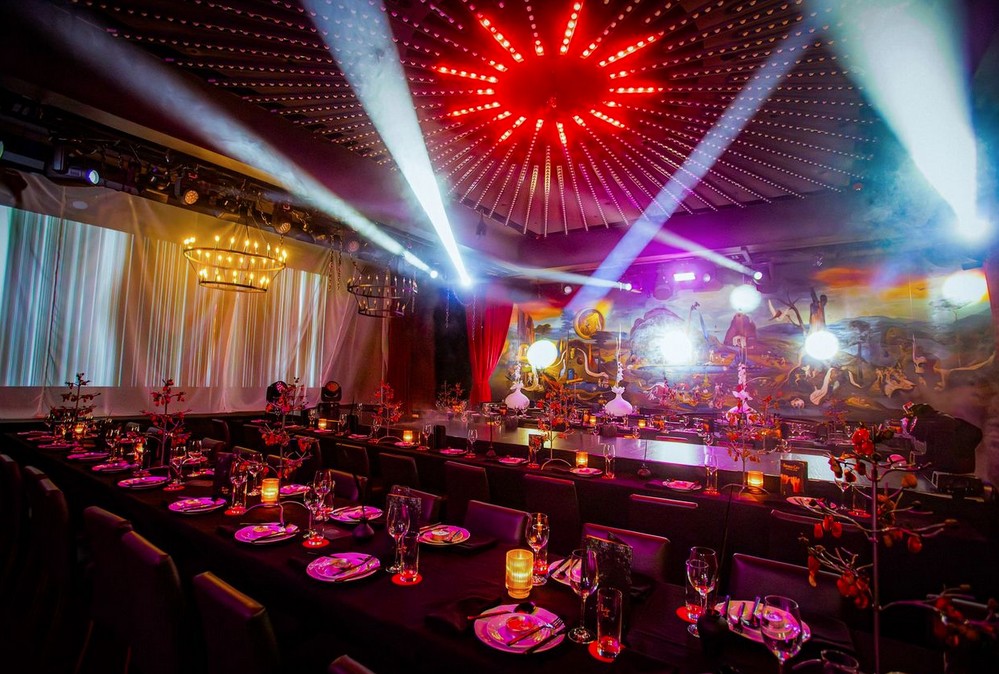
Jono Mason, Director of Paradise Club, describes the concept this way: “Rather than asking guests to follow a prescribed storyline, Salvage City places them at the center of the world itself. The experience unfolds around you through live performance, character encounters, music, and ritualized moments that enrich the dining journey. It’s orchestrated to feel a little chaotic & foreign, and intentionally designed to be social and participatory, creating space for conversation, celebration and discovery. Whether guests arrive for a date night, a group celebration, or simply a fun night out, they become part of the atmosphere rather than merely observing it.”
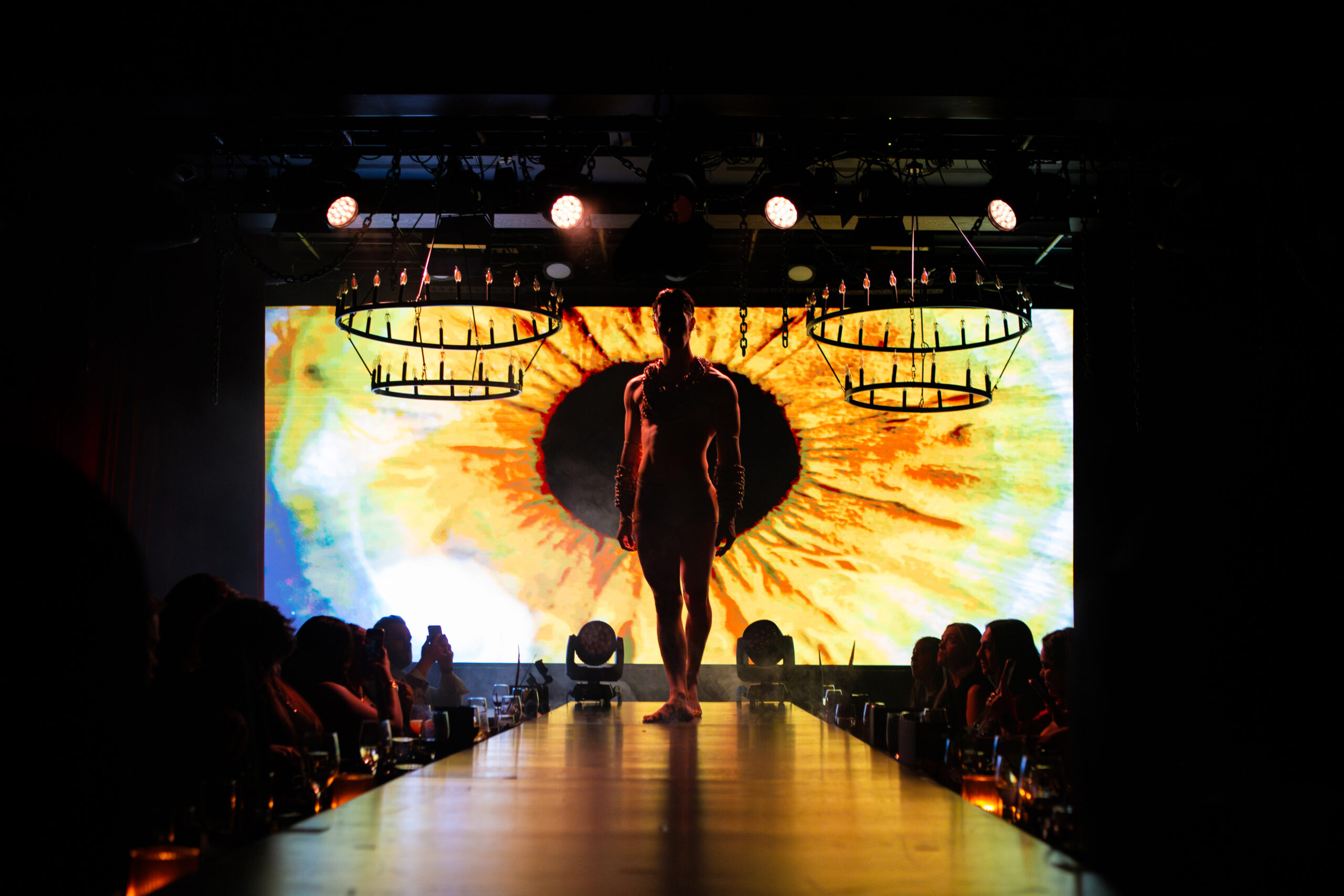
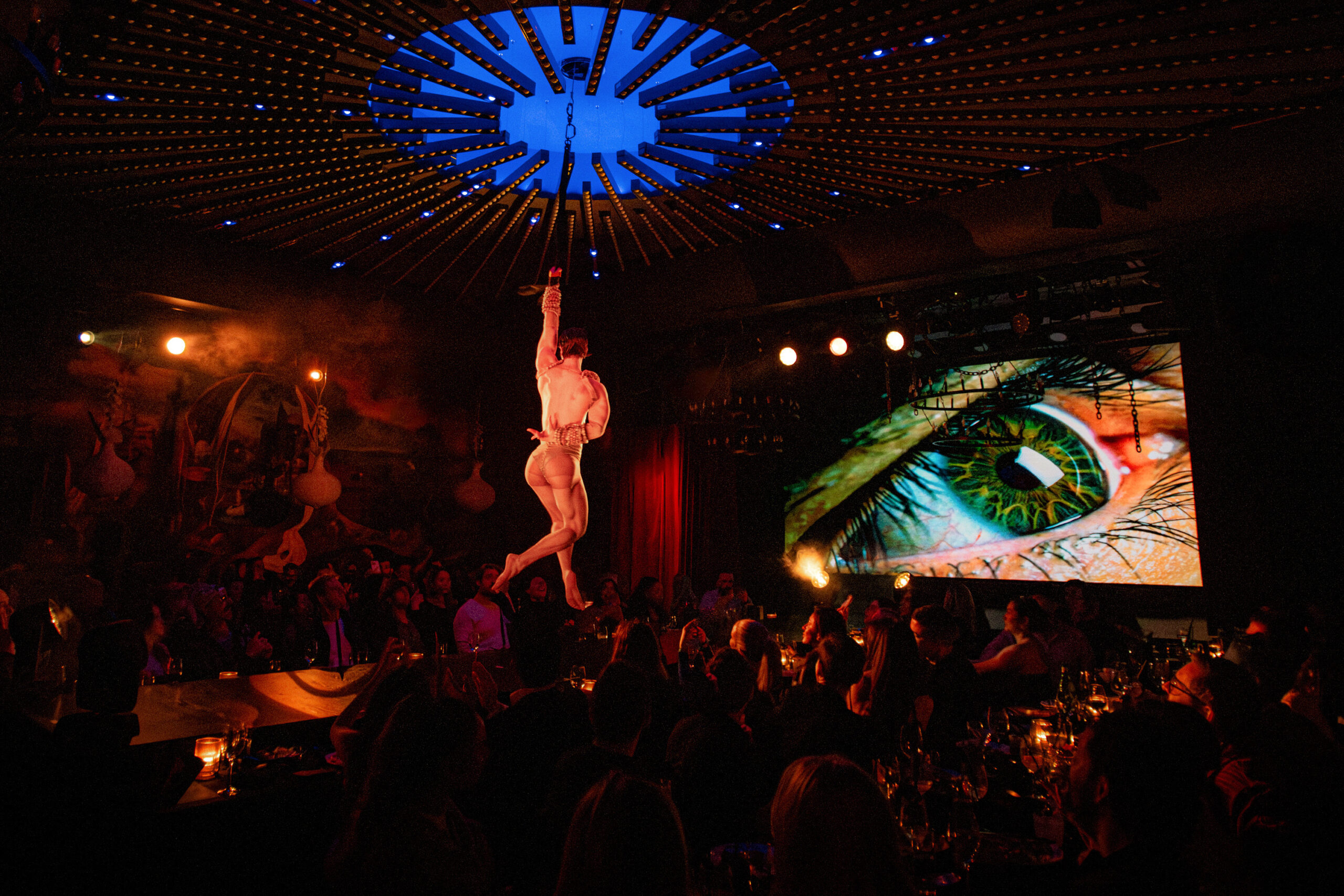
That philosophy reveals itself quickly. Dancers, acrobats, musicians, servers, and performers circulate through the room as a narrative slowly unfolds. Unlike conventional dinner theater, there is no obvious separation between audience and cast. The evening feels less like attending a show and more like entering an alternate universe where dinner happens to be one part of a much larger story.
The Manhattan residency also represents a milestone for Executive Producer Paul Seigenthaler and Five Senses Holdings. Salvage City spent years searching for a permanent home beyond its festival roots. According to Seigenthaler, numerous opportunities came and went before Paradise Club emerged as the right fit.
“Salvage City has been looking for a brick-and-mortar location since its inception six years ago,” Seigenthaler explains. “We’ve literally been under contract at 11 different locations, and none of them ever felt right. I decided not to pursue them.”
His admiration for Paradise Club, The Times Square EDITION, and the property’s global positioning ultimately helped shape the decision. The location itself makes strategic sense. Times Square attracts a constant flow of international visitors throughout the year, creating a uniquely diverse audience that mirrors the communal spirit at the center of the production.
That spirit surfaces repeatedly throughout Seigenthaler’s comments. While many immersive experiences focus on technology or visual effects, he continually returns to a simpler idea: connection.
“Food brings people together when we break bread together,” he says. “It doesn’t matter where we’re from, how old we are, our political views, or our religion. Breaking bread offers that bond and brings unity to people from all different walks of life.”
The emotional foundation of Salvage City stems from family gatherings. Seigenthaler speaks passionately about arriving at relatives’ homes, accepting whatever food appears on the table, helping in the kitchen, sharing stories, and surrendering control to trusted hosts. That sentiment translates directly into the guest experience.
“What Salvage City is to me is the ability to shut off your mind and come with us on a journey,” he says. “Meet others that you may know and meet new people that you can build bonds with for the rest of your life.”
Visually, the production is striking. The world of Salvage City exists somewhere between post-apocalyptic fantasy, avant-garde cabaret, and futuristic circus. Interestingly, the concept originated from practical limitations during the pandemic rather than an elaborate artistic manifesto.

“I think a creative director or producer in my shoes might lie to you or fluff the origin story of this concept,” Seigenthaler says. “I, on the other hand, will tell you that it came out of necessity.”
The earliest version required guests to remain socially distanced in parked cars while watching performances. Seeking an environment where automobiles felt natural, the team landed on the concept of a junkyard. That setting evolved into Salvage City.
“We decided that we wanted to build a junkyard,” he explains. “Junkyards can often feel nostalgic, rustic, and in many ways post apocalyptic.”
From there, contrast became the creative engine. Rustic surroundings were paired with futuristic wardrobes. Multiple performance stages were placed throughout the footprint so every guest would enjoy changing perspectives throughout the evening. Lasers, haze effects, circus artistry, dance, and illusion combined to create a sensory environment that feels intentionally unconventional without becoming overwhelming.
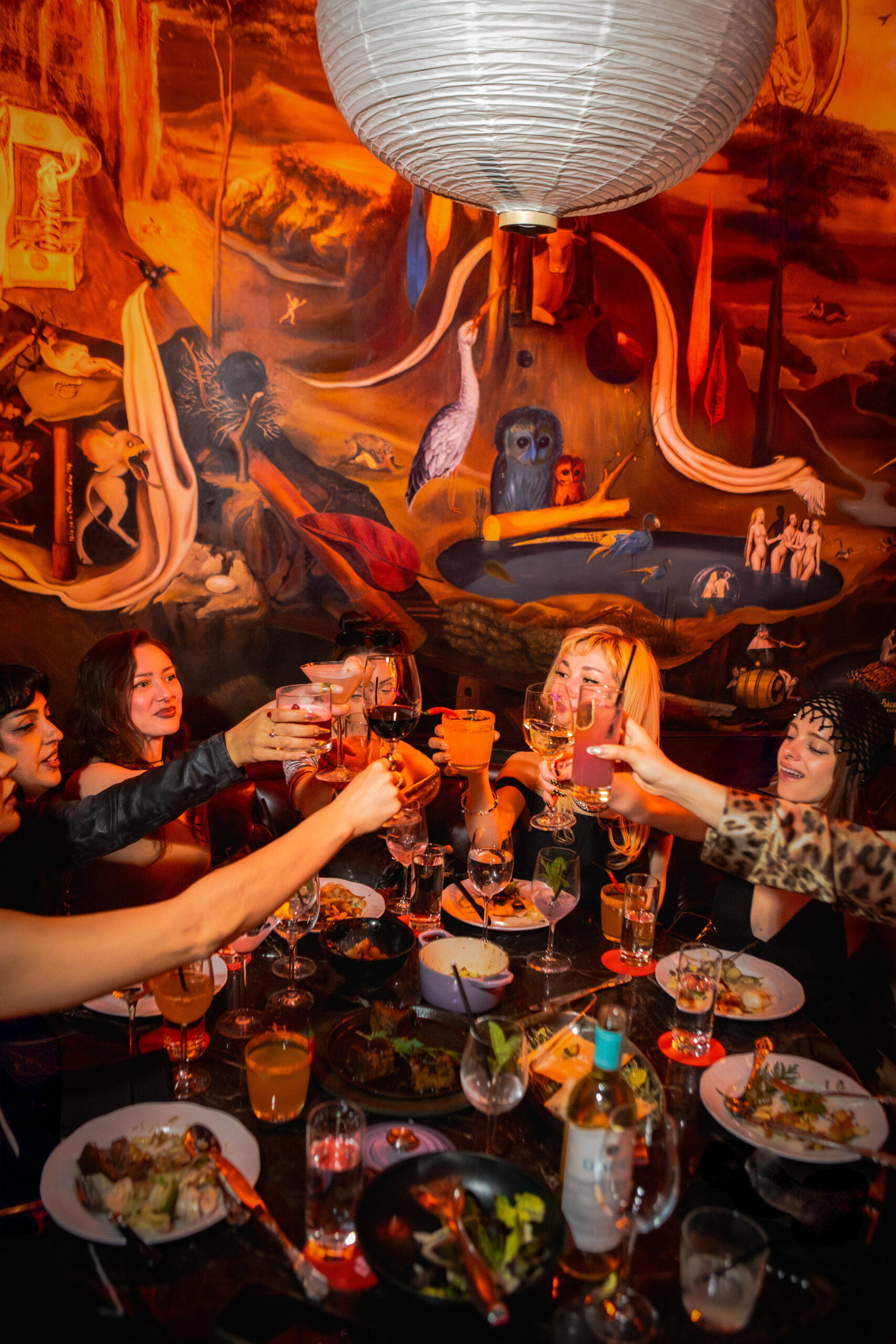 The culinary component proves equally important. Michelin-starred chef John Fraser developed a multi-course family-style menu that includes dishes such as Roots Pulled from Edible Soil, Hay-Smoked Black Cod, and Bush Berry and Juniper-Braised Short Rib. These are not menu items added for novelty. They function as narrative devices.
Mason emphasizes the deliberate integration between food and storytelling. “It’s very intentional. The menu, as well as the service team are extensions of the world we’re creating. It’s important to have fun with it. There’s a good amount of personal joy, heartache, imagination and dreams embedded in all of it.”
He adds: “We always knew the dinner was fully integrated with the show. Its theme has elements of post civilization collapse, indulgence, theatricality that we explore throughout the meal. If you didn’t have a functional kitchen, what would this celebration & meal look like?”
Executive Chef Warren Baird of JF Restaurants echoes that perspective.
“It’s easy to serve people crabcakes and salmon at a jazz club, but when your performers become servers mid-show, it is an opportunity to connect the two components in a unique way,” Baird says. “Salvage City is a highly sensory experience with elements of dance, magic, acrobatics, etc. The food in this type of show needs to have the same goals, or it takes away from the guest experience.”
One memorable example involves edible soil, interactive presentations, and a signature tin-can course that intentionally plays with expectations. “The tin can is a unique moment,” Baird notes. “Guests are not sure what to expect, it syncs well with the chaotic nature & spirit of the evening.”
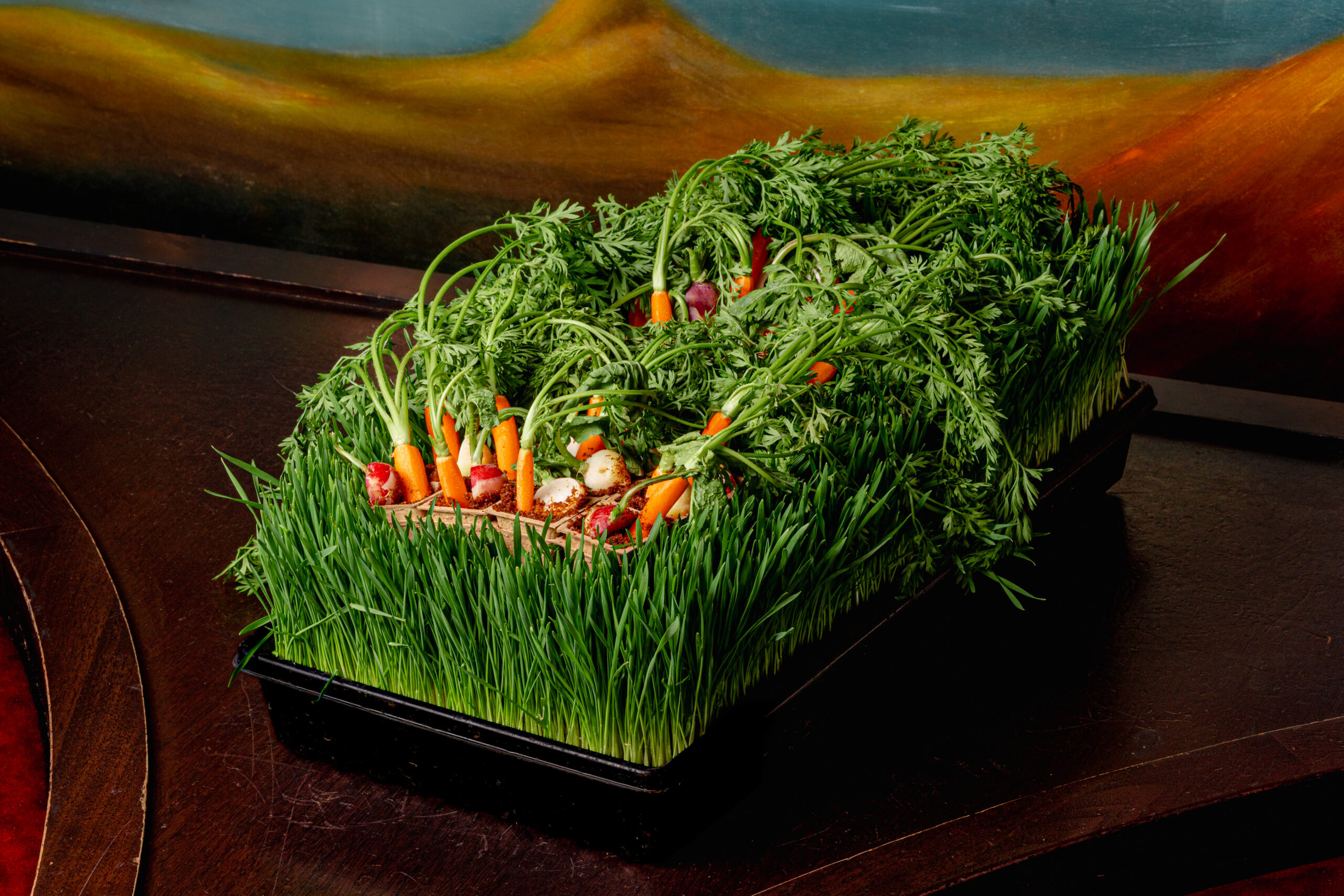
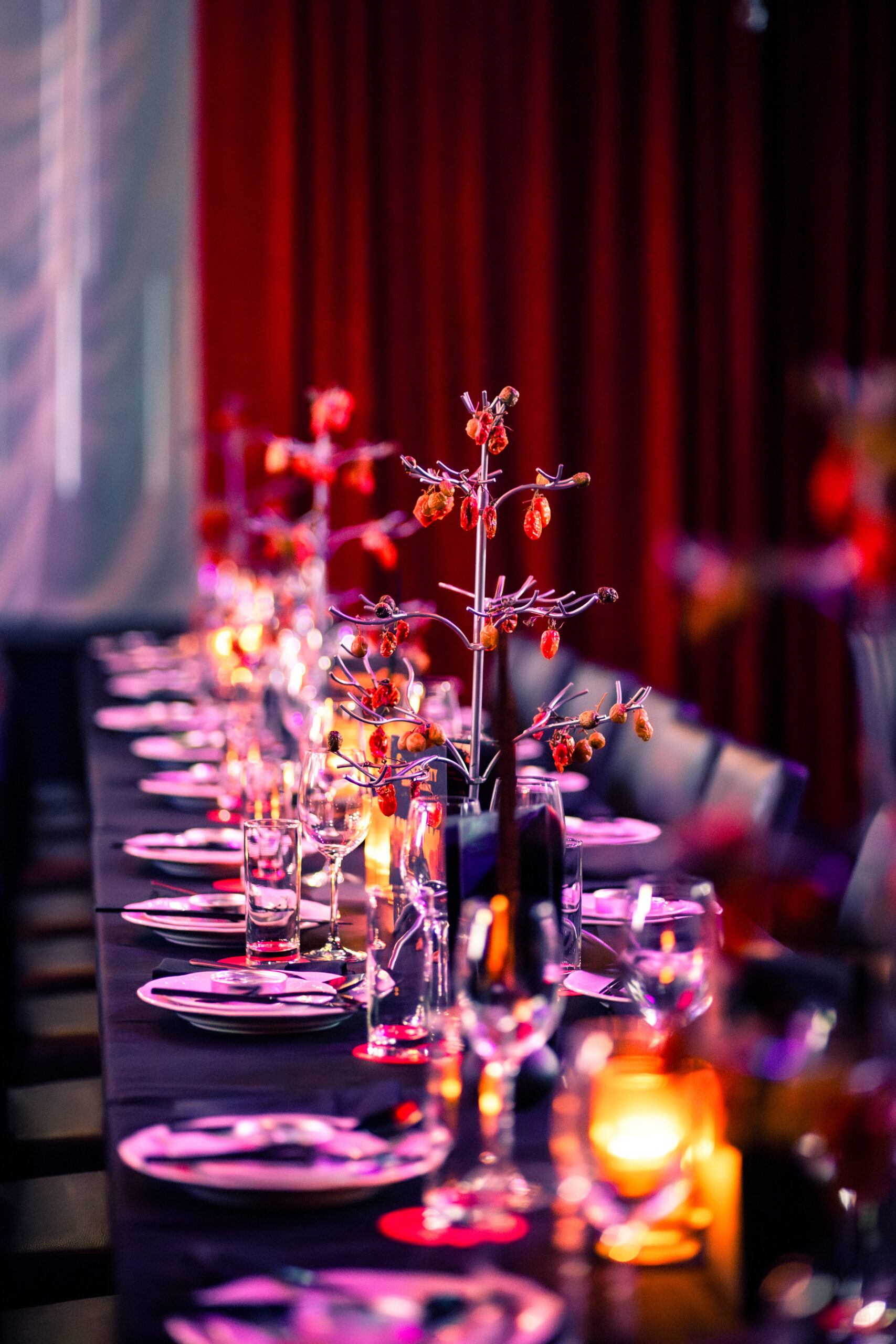
Salvage City Paradise 2026 Photo by Emma Brawley
What ultimately separates Salvage City from competing entertainment options is its refusal to fit neatly into a category. Broadway offers theatrical excellence. Fine dining delivers culinary precision. Rooftop lounges provide atmosphere. Nightclubs deliver energy. Salvage City attempts to borrow from all of them while avoiding their limitations.
Mason describes the experience as “more like an extraordinary dinner party rather than a traditional show.” He believes participation matters more than observation, creating opportunities for guests to become contributors to the evening’s energy rather than passive spectators.
Seigenthaler offers perhaps the most revealing assessment. “Our purpose with Salvage City is to bring all of these things together. To bring the beauty of dance and Broadway, tasting menus and culinary experiences, a cocktail on a rooftop lounge, and the energy of nightlife back together as one.”
The concept also reflects broader shifts occurring throughout luxury travel and hospitality. Travelers increasingly prioritize experiences that create lasting memories. They want stories worth telling after they return home. They want interaction rather than observation.
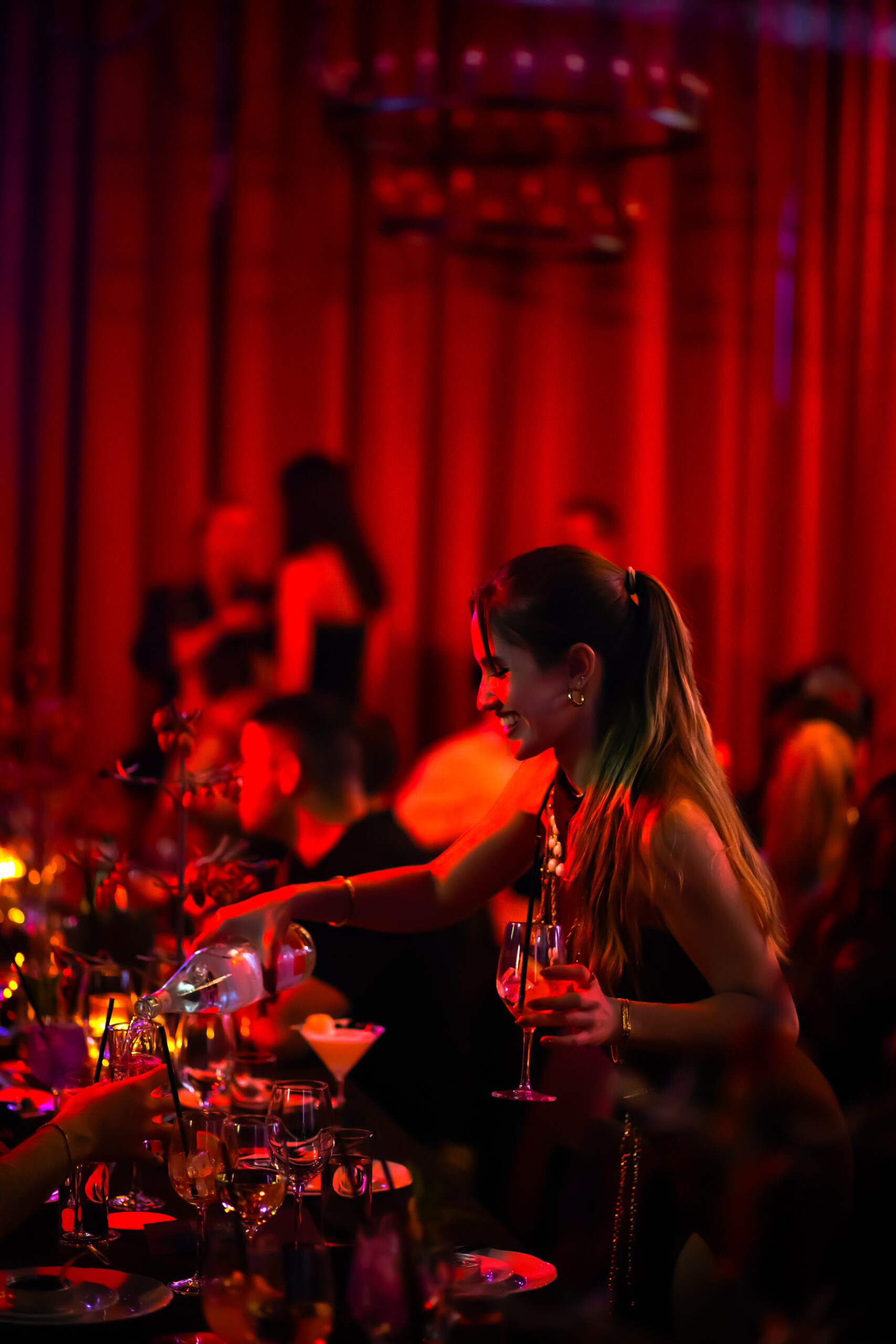 “The era of velvet ropes and bottle service has steadily given way to something more dynamic,” Mason says. “Guests are seeking unique, meaningful experiences that spark curiosity and bring performance, art and community together in unexpected ways.”
That observation feels accurate. Around the world, hospitality brands are investing heavily in immersive dining, experiential entertainment, and hybrid concepts that blur traditional categories. Salvage City represents one of the more ambitious examples currently operating in New York.
Perhaps the most telling comment emerged when Seigenthaler discussed celebrity guests. Rather than naming names, he declined, citing trust. Then he offered a simple philosophy: “Everyone who walks to our door is a celebrity and will be treated exactly as that.”
In an industry increasingly focused on exclusivity, that approach feels refreshing.
For visitors planning a New York itinerary, the city’s legendary attractions remain essential. See the Statue of Liberty. Visit world-class museums. Walk the Brooklyn Bridge. Explore the neighborhoods that give New York its character. Then reserve an evening for something less predictable.
Salvage City is not attempting to replace traditional sightseeing. It complements it. The production recognizes that destinations are remembered not only through monuments and landmarks, but through shared experiences, unexpected conversations, sensory surprises, and nights that refuse to fit neatly into memory. In a city built on reinvention, that may be exactly why this particular experience feels at home.
~~~
Entrepreneur Leadership Network member Merilee Kern, MBA is an internationally-regarded brand strategist and analyst who reports on cultural shifts and trends as well as noteworthy industry change makers, movers, shakers and innovators across all categories, both B2C and B2B. This includes field experts and thought leaders, brands, products, services, destinations and events. As Founder, Executive Editor and Producer of “The Luxe List,” Merilee is a prolific business, lifestyle, travel, dining and leisure industry voice of authority and tastemaker. She keeps her finger on the pulse of the marketplace in search of new and innovative must-haves and exemplary experiences at all price points, from the affordable to the extreme. Her work reaches multi-millions worldwide via broadcast TV (her own shows and copious others on which she appears) as well as a myriad of print and online publications. Connect with her at www.TheLuxeList.com / Instagram www.Instagram.com/MerileeKern / X http://www.X.com/MerileeKern / Facebook www.Facebook.com/MerileeKernOfficial / LinkedIN www.LinkedIn.com/in/MerileeKern.
***Some or all of the accommodations(s), experience(s), item(s) and/or service(s) detailed above may have been provided or arranged at no cost to accommodate if this is review editorial, but all opinions expressed are entirely those of Merilee Kern and have not been influenced in any way.***
Imagery courtesy / copyright of Emma Brawley Photography and/or Salvage City Supper Club
***Some or all of the accommodations(s), experience(s), item(s) and/or service(s) detailed above may have been provided at no cost and/or arranged to accommodate this review, but all opinions expressed are entirely those of Merilee Kern and have not been influenced in any way as per the disclosure policy on our “Legal” page***